SpaceX’s reported plans to integrate small cell technology into Starlink terminals have put femtocells back in the spotlight, prompting wider discussion about how satellite connectivity and terrestrial cellular coverage could work together.
Much of the debate has focused on whether a network of customer-hosted small cells could provide widespread mobile coverage. But there is also a simpler and potentially compelling opportunity: using Starlink as satellite backhaul for local 4G or 5G cellular coverage.
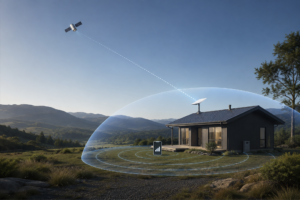
For a Starlink customer in a rural or poorly connected location, an integrated small cell could provide a ‘local bubble’ of genuine cellular coverage directly to standard mobile handsets. Rather than relying solely on Wi-Fi or Wi-Fi Calling, the handset could connect over 4G or 5G, with Starlink providing the satellite connection back to the wider network.
Speaking to Light Reading, RANsemi CEO and small cell pioneer Peter Claydon estimates that a fully integrated small cell could add no more than $200 to the cost of a Starlink terminal, assuming component prices return to more normal levels.
Peter told Light Reading:
“They would get a small bubble of coverage, but if you have a house in a rural location, a 50-meter radius bubble may be all you need.”
The concept also represents a new evolution of the femtocell: a highly integrated, low-cost small cell providing local cellular coverage, with satellite connectivity providing the backhaul. Highly integrated silicon and software can enable increasingly compact and cost-effective 4G and 5G small cells, opening deployment models that extend well beyond conventional cellular infrastructure.
At RANsemi, we believe the combination of satellite backhaul and highly integrated small cell technology has enormous potential, particularly in rural, remote and other locations where conventional terrestrial coverage is difficult or uneconomic to provide.
Read Iain Morris’ full analysis, including Peter’s comments, in Light Reading here.